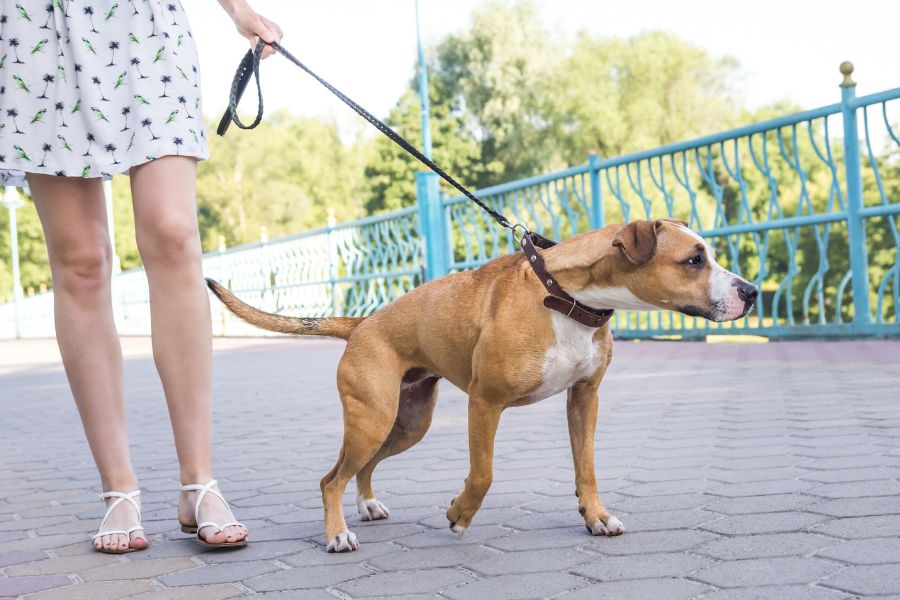
You lace up your shoes, clip on the leash, and step outside for a relaxing stroll through the neighborhood with your pup – and within a minute of closing the door, your dog has wrapped the leash around a mailbox, lunged at a passing squirrel, and nearly pulled you off your feet chasing a scent trail across your neighbor’s front lawn.
Sound familiar? Leash manners are one of the most common challenges pet owners face. Happily, these behaviors are all fixable with patience and the right approach.
Why Dogs Pull, Lunge, and Zigzag
Before diving into solutions, let’s go over why dogs behave this way in the first place.
- Pulling usually comes down to the simple fact that it works. If your dog pulls toward the park and the park gets closer, they’ve learned that pulling equals progress.
- Lunging is triggered by excitement, fear, or predatory instinct; a passing cyclist, another dog, or a squirrel can be just too interesting to ignore.
- Zigzagging? That’s your dog’s nose doing its thing. Dogs process the world primarily through smell, and a walk is basically an all-you-can-sniff buffet.
None of these behaviors means your dog is bad or untrainable. They mean your dog is being a dog!
Tip #1: Stop Rewarding the Pull
The single most effective thing you can do about leash pulling is to remove the reward. The moment your dog hits the end of the leash and pulls, stop walking. Stand still, stay calm, and wait. The second your dog releases tension and looks back at you, mark that moment with a “yes!” or a click (if you use a clicker), give a small treat, and start walking again.
It feels slow at first. Your 20-minute walk might take 45 minutes. But within a week or two of consistent practice, most dogs start to understand that a tight leash means no movement, and a loose leash means that the walk continues. Consistency is everything here, so every person walking your dog needs to use the same approach.
Tip #2: Redirect Before the Lunge Happens
Lunging is a reactive behavior, and the key to addressing it is intervention before it escalates. Learn to read your dog’s body language. When their ears perk up, their body stiffens, or they fix their gaze on something ahead, that’s your cue to act. Call their name cheerfully, step to the side to create distance from the trigger, and redirect their attention with a treat or a quick “let’s go!” in a bright tone.
Over time, with practice, you can work your dog closer to their triggers at a pace they can handle (a process that trainers call desensitization). Start far away from whatever sets them off, reward calm behavior, and gradually close the gap over multiple sessions.
Tip #3: Give Sniffing Its Own Time
Don’t insist that your dog heel for the entire walk. Sniffing is mentally enriching and genuinely tiring for dogs in the best way. A 20-minute “sniff walk” can leave a dog more satisfied than a brisk 45-minute march.
Try designating “free sniff” zones during your walk, such as a particular stretch of grass or a specific corner, where your dog can zigzag and explore to their heart’s content. Use a cue like “go sniff” to signal it’s free time.
Then, when you need them focused and walking beside you, use a different cue like “let’s go” to bring them back. This gives your dog an outlet for their natural instincts while still building structure into the walk.
Tip #4: Consider Your Equipment
A well-fitting no-pull harness (front-clip style) or a head halter can make a meaningful difference while you’re training. These tools don’t replace training, but they give you a little more control and reduce the physical strain on both you and your dog.
When Extra Help Makes a Difference
Consistent, structured walks are among the fastest ways to improve leash manners, but you may not have the time or bandwidth to work on it every single day. That’s where professional dog walkers can genuinely bridge the gap.
At Peak City Puppy and Dog Walkers, our team works with dogs of all breeds, sizes, and energy levels. We reinforce good habits on every outing, so the progress you make at home keeps building even on your busiest days. Ready to make walks something you and your dog actually look forward to? We’d love to help!
Reach out today and let’s get those tails wagging – and those leashes loose!